Ser vs Estar: The Ultimate Guide for English Speakers

Ser vs Estar: The key differences at a glance
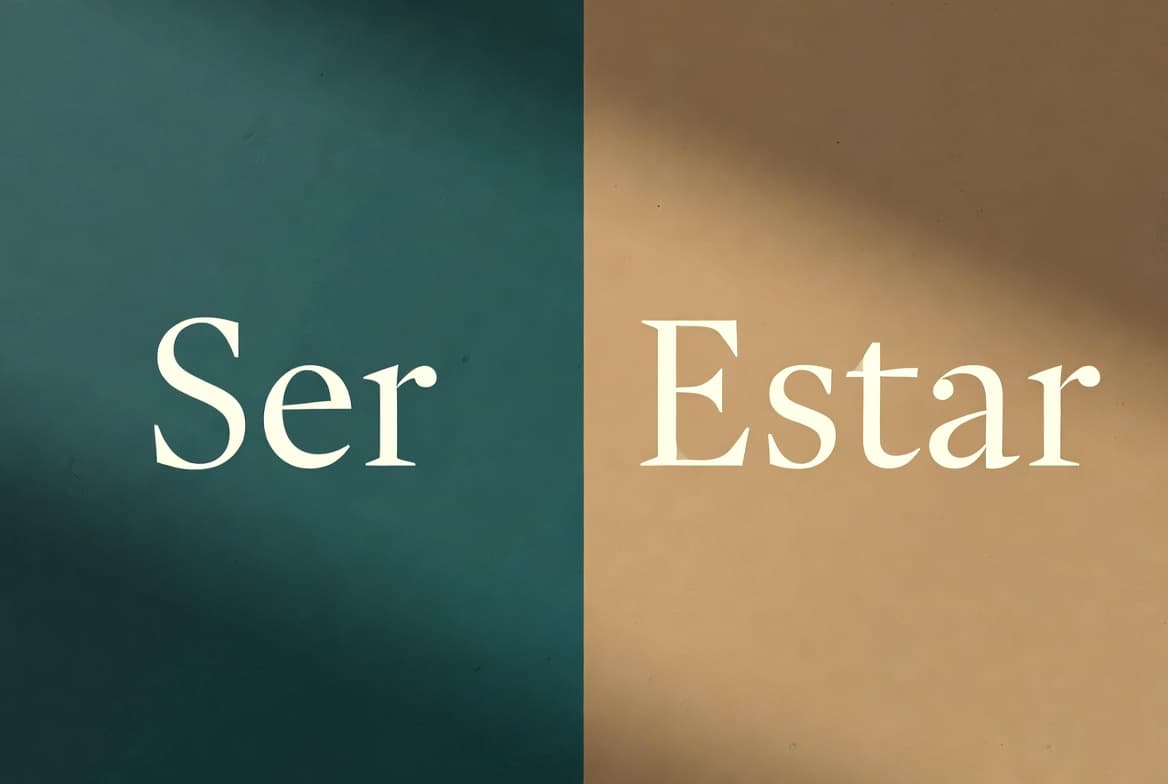
One of the biggest challenges for English speakers learning Spanish is knowing when to use ser and when to use estar. Both mean "to be", but they are not interchangeable. Mastering them will make your Spanish sound much more natural.
In this complete guide you'll find clear rules, practical examples, comparison tables, and exercises you can practice directly in Bocabla.
Why does Spanish have two verbs for "to be"?
- Ser is used for permanent or essential characteristics — what something is.
- Estar is used for temporary states, locations, or conditions — how something is right now.
English uses just one verb ("to be"), so this distinction can feel tricky at first.
Easy mnemonics: DOCTOR and PLACE
SER = DOCTOR (permanent characteristics)
- Description (physical or personality traits)
- Occupation / Profession
- Characteristics (inherent qualities)
- Time and date
- Origin and nationality
- Relationships
ESTAR = PLACE (temporary states)
- Position / Location
- Location (temporary)
- Actions in progress (estar + -ing)
- Conditions and states
- Emotions and feelings

When to use SER
- Identity and permanent descriptions
- I am American. → Soy estadounidense.
- She is tall and friendly. → Es alta y simpática.
- The car is red. → El coche es rojo.
- Occupation / Profession
- I am a teacher. → Soy profesor.
- My sister is a doctor. → Mi hermana es médica.
- Origin and material
- This wine is from Spain. → Este vino es de España.
- The table is made of wood. → La mesa es de madera.
- Time, date, and events
- Today is Monday. → Hoy es lunes.
- The party is at Maria's house. → La fiesta es en casa de María.
When to use ESTAR
- Location and position
- I am in New York right now. → Estoy en Nueva York.
- The book is on the table. → El libro está sobre la mesa.
- Temporary states and emotions
- I am tired today. → Estoy cansado hoy.
- She is happy because she passed the exam. → Está feliz porque aprobó el examen.
- Health and conditions
- My friend is sick. → Mi amigo está enfermo.
- Are you okay? → ¿Estás bien?
- Actions in progress (estar + gerund)
- I am studying Spanish. → Estoy estudiando español.
- The kids are playing. → Los niños están jugando.
Comparison table: The most confusing cases
| Spanish | English meaning | Explanation |
|---|---|---|
| Juan es aburrido | Juan is boring (personality) | Permanent trait (Ser) |
| Juan está aburrido | Juan is bored (right now) | Temporary feeling (Estar) |
| La manzana es verde | The apple is green (color) | Inherent characteristic |
| La manzana está verde | The apple is unripe | Current temporary state |
| Soy casado/a | I am married (civil status) | Permanent (Ser) |
Quick tips for English speakers
- If you can replace "to be" with "to seem" or "to feel" → usually estar.
- If it's about who or what someone/something fundamentally is → ser.
- With adjectives: changing ser/estar often completely changes the meaning.
Practice exercise
Complete with ser or estar:
- My car _____ red. (permanent)
- I _____ tired after work. (now)
- The meeting _____ at 3 PM.
- The children _____ playing in the garden.
- I _____ from London.
(Answers at the bottom)
Want to practice thousands of similar sentences with spaced repetition, native audio, and intelligent exercises?
Try Bocabla for free →
Answers
- es
- Estoy
- es
- están
- soy
Additional resources: Thousands of flashcards and exercises focused on ser/estar in Bocabla.
Seguir leyendo

Spanish Food & Restaurant Vocabulary: 50+ Essential Words and Phrases
Master Spanish food vocabulary with this fun storytelling guide. Learn 50+ words and phrases to order confidently, understand menus, and enjoy restaurants like a local in Spain and Latin America.

Travel Spanish: 50+ Essential Words and Phrases for Your Trip
Learn 50+ practical Spanish words and phrases for traveling with this fun storytelling guide. Real situations, useful expressions, and tips to travel with confidence in Spain and Latin America.

Spanish Humor: How to Understand and Use Jokes in Spanish
Master Spanish humor with this fun guide. Learn the most common types of jokes, sarcasm, wordplay, popular expressions, and how to tell jokes like a native without sounding awkward.